Factory Cooling System Design Solutions: How to Build Energy-Efficient and Reliable Cooling Infrastructure
View More

 Home News Industry News Advanced Battery Cooling Solutions for EVs: Meeting the Challenges of High Energy Density
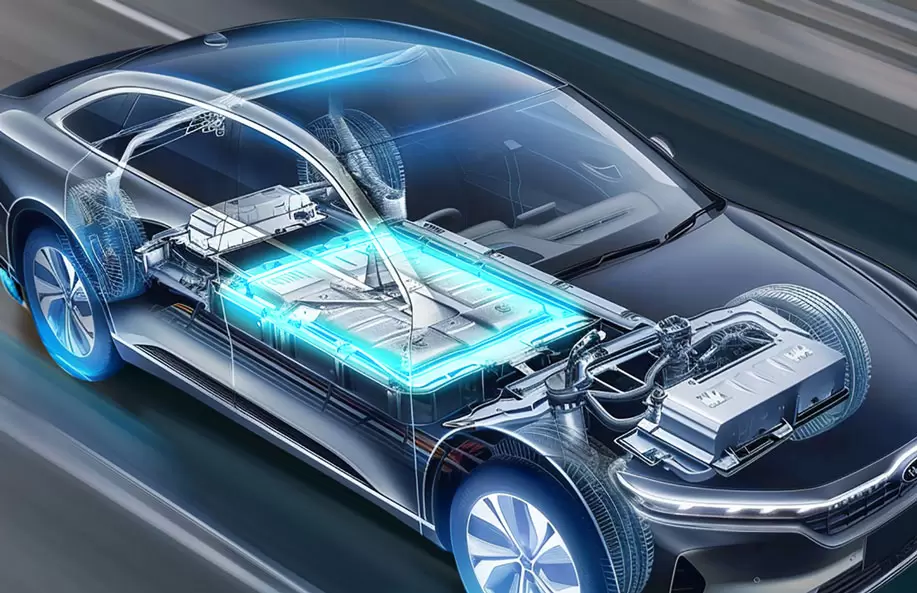
The rapid expansion of the electric vehicle industry has fundamentally changed how automotive systems are designed and engineered. Among all technical challenges faced by EV manufacturers, battery thermal management has become one of the most critical. As battery capacity increases and energy density continues to rise, effective heat control is no longer a supporting function—it is a core determinant of safety, performance, and service life.
Modern electric vehicles rely on lithium-ion battery systems that operate within narrow temperature limits. Even small deviations can result in accelerated degradation, reduced driving range, or, in extreme cases, thermal runaway. As a result, advanced battery cooling solutions have become essential to enabling the next generation of electric mobility.
With over twenty-two years of experience in industrial temperature control, AODE applies mature thermal engineering expertise to support the evolving demands of high-energy-density battery systems.
Battery energy density has increased significantly over the past decade. Higher energy density allows EVs to achieve longer range without increasing battery size, but it also introduces new thermal challenges.
As energy density rises:
Heat generation per unit volume increases
Temperature gradients between cells become more severe
Cooling response time becomes more critical
Safety margins decrease
Fast charging, high-speed driving, and regenerative braking further intensify heat accumulation. Without proper cooling, internal battery temperatures can exceed safe operating limits within minutes.
This makes thermal management not only a performance issue, but also a safety requirement governed by strict industry standards.
Traditional internal combustion vehicles primarily rely on air and liquid cooling to regulate engine temperature. EVs, however, require multi-level thermal control across multiple components:
Battery modules and packs
Power electronics
Electric motors
Onboard chargers
Battery systems are particularly sensitive because temperature imbalance between cells can lead to uneven aging, capacity loss, and reduced pack lifespan.
An effective cooling system must achieve:
Uniform temperature distribution
Rapid heat removal under peak load
Stable operation during continuous charging and discharging
Adaptability to varying ambient conditions
This level of control requires far more precision than conventional automotive cooling architectures.
Several cooling approaches are used across the EV industry, each with advantages and limitations.
Air cooling is simple and low cost, but offers limited heat dissipation capacity. It is increasingly unsuitable for modern high-capacity battery packs.
Liquid-based systems provide much higher thermal conductivity and temperature stability. Coolants such as water-glycol mixtures are widely used due to their efficiency and controllability.
Indirect cooling uses cold plates or cooling channels beneath battery cells
Direct cooling allows coolant contact through specialized insulation structures
Among these, liquid cold plate-based systems remain the most widely adopted solution due to reliability, safety, and ease of integration.
Cooling plates serve as the direct heat transfer interface between battery cells and the cooling circuit. Their design determines how effectively heat is extracted from the battery pack.
Key performance requirements include:
High thermal conductivity
Uniform coolant flow distribution
Low pressure drop
Structural strength under vibration
Long-term corrosion resistance
Even minor design flaws—such as uneven channel spacing or poor bonding—can cause localized hotspots that compromise battery health.
As battery systems evolve, cooling solutions must overcome several technical constraints.
Battery packs must fit within limited chassis space while maximizing capacity. Cooling systems must remain compact without sacrificing performance.
Higher power density leads to localized heat accumulation that demands rapid thermal response.
Cooling plates must align precisely with module architecture, electrical insulation requirements, and mechanical support structures.
The cooling solution must integrate seamlessly with pumps, chillers, valves, and control units.
These challenges make standardized cooling components increasingly inadequate for modern EV platforms.
AODE was founded in Shenzhen in 2004, and in 2007 established SUZHOU AODE PRECISE EQUIPMENT Co., LTD. in Suzhou.
From its inception, AODE has focused on industrial temperature control technology. Over more than two decades of continuous development, the company has grown into a comprehensive enterprise integrating:
Thermal system research and development
Precision manufacturing
Customized solution design
Sales and technical service
In its early years, AODE specialized in mold temperature controllers and industrial water chillers. As technology advanced, the company gradually expanded toward:
System integration of industrial temperature control equipment
Development of high-end precision temperature control systems
This evolution enables AODE to address complex thermal requirements far beyond single-product manufacturing.
Battery thermal management shares many similarities with industrial temperature control applications:
Continuous operation under load
Precise temperature regulation requirements
High reliability expectations
Closed-loop fluid control
AODE applies proven industrial methodologies to EV battery cooling design, including:
Thermal load modeling
Flow channel optimization
Multi-zone temperature control logic
Long-duration stability validation
This industrial-grade approach enhances reliability and consistency under real-world vehicle operating conditions.
When developing battery cooling systems, AODE focuses on several core engineering principles.
Preventing temperature deviation between cells is essential for battery longevity. Cooling plate structures are optimized to maintain consistent thermal contact across the module.
Optimized channel geometry increases turbulence where necessary while maintaining stable flow rates.
Cooling plates and manifolds can be customized according to different battery pack layouts and capacities.
Materials and joining processes are selected to withstand thermal cycling, vibration, and chemical exposure over extended service life.
These principles ensure reliable operation under both everyday driving and extreme operating conditions.
Battery cooling cannot function independently. It must operate as part of a fully coordinated thermal control system.
AODE provides integrated solutions that align cooling plates with:
Industrial chillers
Coolant circulation units
Temperature sensors
Flow control systems
Central control logic
This system-level integration improves:
Cooling response time
Energy efficiency
Thermal stability during fast charging
Overall vehicle reliability
Such integration capability significantly reduces development time for EV manufacturers.
For battery systems, reliability is non-negotiable. AODE applies strict quality control measures throughout production:
Incoming material inspection
Precision machining tolerance control
Welding and sealing verification
Pressure and leakage testing
Thermal performance validation
Each cooling solution is verified under simulated operating conditions before delivery, ensuring stability across long-term use.
As EV batteries move toward higher voltages, faster charging, and greater capacity, thermal management will remain a defining factor in system design.
Advanced battery cooling solutions must evolve alongside:
Ultra-fast charging infrastructure
High-nickel cathode chemistry
Solid-state battery research
Integrated vehicle thermal domains
With decades of temperature control experience and continuous R&D investment, AODE remains committed to supporting next-generation EV platforms through reliable, efficient, and application-driven thermal solutions.
High energy density batteries are transforming electric vehicles, but they also introduce complex thermal challenges that cannot be solved through conventional cooling methods.
Effective battery cooling solutions must provide precision, stability, scalability, and long-term reliability. From cooling plate design to system integration, every detail directly impacts safety and performance.
Backed by more than twenty-two years of industrial temperature control experience, AODE delivers engineered thermal management solutions that meet the demanding requirements of modern electric vehicles. Through proven technology, disciplined manufacturing, and system-level understanding, AODE continues to support the safe and efficient development of global electric mobility.