Industry Breakthrough | AODE's High-precision whole-factory Temperature Control Solution Boosts a significant Leap in the quality of precise temperature control for semiconductor materials
View More

 Home News Industry News How Specialized Cooling Units Support Semiconductor Manufacturing Excellence
In today’s semiconductor industry, where process nodes continue to shrink and device complexity increases, thermal management has become one of the most critical factors determining yield, reliability, and overall production efficiency. From wafer fabrication to packaging and testing, maintaining precise and stable temperatures is not just a requirement—it is a foundation for excellence.
This is where specialized cooling units play a decisive role. Unlike general-purpose systems, semiconductor-focused cooling technologies are engineered to meet the strict demands of ultra-clean environments, high heat flux, and micron-level precision. Companies like AODE (SUZHOU AODE PRECISE EQUIPMENT Co., LTD.), with decades of experience in industrial temperature control, are at the forefront of delivering reliable, high-performance solutions tailored for this industry.
Semiconductor fabrication involves hundreds of tightly controlled processes, including lithography, etching, deposition, ion implantation, and chemical-mechanical polishing. Each of these steps is highly sensitive to temperature fluctuations.
Even a variation of ±0.1°C can result in:
· Line width deviations
· Material stress and deformation
· Chemical reaction inconsistencies
· Reduced wafer yield
This makes semiconductor process cooling a core infrastructure component rather than a supporting utility. Temperature stability ensures process repeatability, which is essential for producing chips at scale with consistent quality.
Standard industrial cooling systems cannot meet the unique requirements of semiconductor fabrication environments. Specialized cooling units are designed with the following characteristics:
Semiconductor tools require precision cooling semiconductor systems capable of maintaining extremely tight temperature tolerances. Advanced PID control algorithms and high-resolution sensors are used to ensure accuracy across dynamic load conditions.
Processes such as plasma etching and deposition generate rapid heat changes. Cooling systems must respond instantly to avoid thermal lag, which can compromise process stability.
Cooling units must operate without introducing contaminants. This includes:
· Low vibration design
· Minimal particle generation
· Clean-compatible materials and sealing systems
Semiconductor fabs operate 24/7. Any cooling system downtime can halt production lines, resulting in significant losses. Therefore, reliability and redundancy are critical design considerations.
Specialized cooling units are integrated across multiple stages of production. Here’s how they contribute:
Lithography machines rely on precise optical alignment and photoresist behavior, both of which are temperature-sensitive. Stable cooling ensures consistent exposure results.
These processes generate substantial heat due to plasma and chemical reactions. Semiconductor equipment cooling ensures uniformity across wafers and prevents damage to equipment components.
Temperature affects dopant distribution and penetration depth. Precise cooling is essential to maintain doping accuracy.
Temperature influences chemical viscosity and reaction rates. Controlled cooling maintains process consistency.
Even during back-end processes, temperature stability ensures electrical performance accuracy and packaging integrity.
As chip architectures evolve, so do the demands placed on cooling systems. Traditional chillers have gradually given way to more advanced, application-specific solutions.
Early systems focused on basic temperature regulation. Today, semiconductor cooling equipment is integrated into broader process control systems, enabling:
· Real-time monitoring
· Data-driven optimization
· Remote diagnostics
Modern fabs are under pressure to reduce energy consumption. Advanced cooling systems incorporate:
· Variable frequency drives (VFDs)
· Intelligent load management
· Heat recovery technologies
With the expansion of fabs, modular cooling systems allow for flexible deployment and easier maintenance without disrupting operations.
Founded in Shenzhen in 2004 and expanded with the establishment of Suzhou AODE High-end Equipment Co., Ltd. in 2007, AODE (SUZHOU AODE PRECISE EQUIPMENT Co., LTD.) has dedicated over two decades to the field of industrial temperature control.
From its early focus on mold temperature controllers and water chillers, AODE has evolved into a comprehensive provider of industrial temperature control equipment, offering:
· Customized semiconductor cooling solution design
· High-precision temperature control systems
· Integrated cooling and heating systems
· Advanced monitoring and automation capabilities
AODE emphasizes R&D and continuous innovation. Its engineering teams work closely with semiconductor manufacturers to develop solutions tailored to specific process requirements.
AODE’s systems are designed to meet the stringent demands of semiconductor fabs, including:
· ±0.1°C or tighter temperature control
· Stable flow and pressure regulation
· Robust operation under continuous workloads
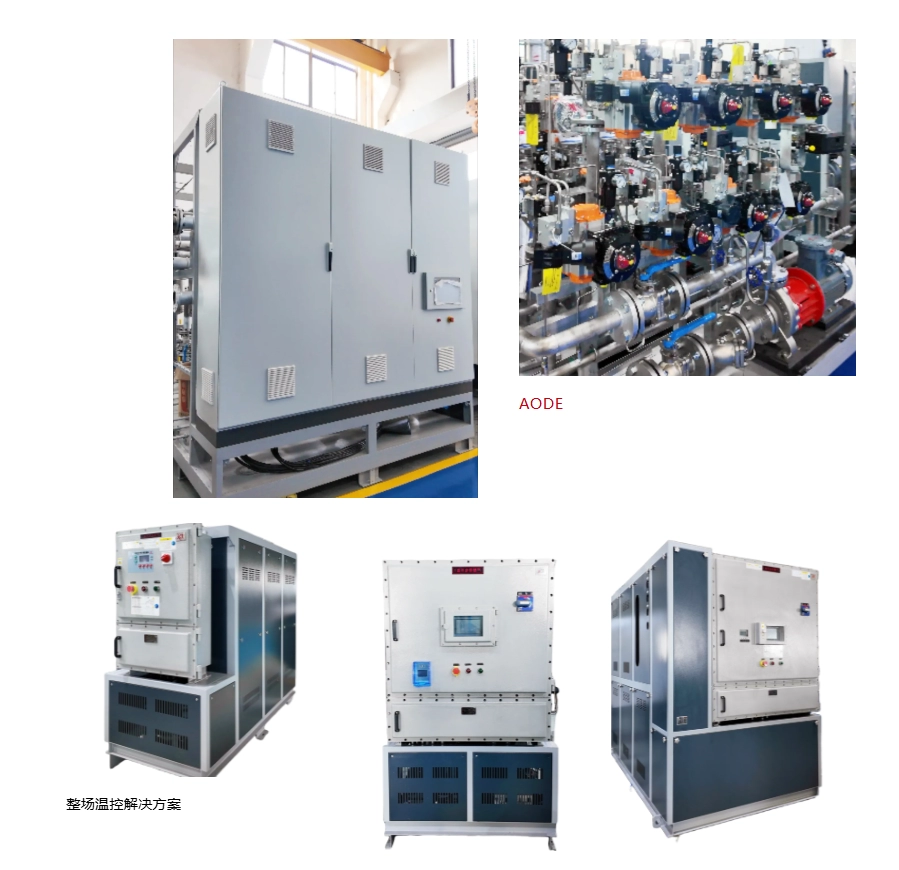
Rather than supplying standalone units, AODE provides complete semiconductor industrial cooling systems that integrate seamlessly with production equipment and facility infrastructure.
Consistent thermal conditions reduce process variability, leading to higher wafer yields.
Proper cooling prevents overheating and thermal stress, extending the life of expensive semiconductor tools.
Automated and intelligent cooling systems reduce manual intervention and optimize energy usage.
Reliable systems minimize unexpected failures, ensuring uninterrupted production.
Choosing the right cooling system requires careful evaluation of several factors:
Different semiconductor processes have unique temperature and flow demands. Customization is often necessary.
Space, cleanroom standards, and integration with existing infrastructure must be considered.
Future expansion plans should be factored into system design.
Reliable after-sales service and technical support are essential for long-term operation.
AODE addresses these challenges through tailored engineering solutions and comprehensive support services, ensuring that clients receive systems aligned with both current and future needs.
The semiconductor industry continues to push boundaries with technologies such as:
· Advanced nodes (sub-5nm)
· 3D packaging
· AI and high-performance computing chips
These innovations will further increase thermal management complexity. Future cooling systems will likely feature:
· AI-driven predictive control
· Digital twin simulation
· Enhanced energy optimization
· Greater integration with smart factory systems
Specialized cooling units will remain a cornerstone of manufacturing excellence, evolving alongside semiconductor technology.
Thermal management is no longer a secondary consideration in semiconductor manufacturing—it is a critical enabler of precision, efficiency, and innovation. Specialized cooling units ensure that every stage of the process operates within optimal temperature conditions, directly impacting product quality and production performance.
With over twenty-two years of experience, AODE (SUZHOU AODE PRECISE EQUIPMENT Co., LTD.) has established itself as a trusted partner in delivering advanced cooling solutions for the semiconductor industry. By combining engineering expertise, system integration capabilities, and a commitment to innovation, AODE continues to support manufacturers in achieving excellence in an increasingly demanding technological landscape.