Precision Temperature Control Solutions for High-End Manufacturing Processes
View More

 Home News Industry News How Industrial Temperature Control for Metal Industry Is Driving Precision Manufacturing in 2026
In 2026, precision manufacturing in the metal sector is no longer defined solely by machining accuracy or material quality. Instead, temperature control has emerged as a critical variable that directly determines product consistency, structural integrity, and overall production efficiency. From aluminum extrusion to high-strength alloy casting, modern manufacturers are increasingly relying on advanced industrial temperature control for metal industry solutions to remain competitive.
Against this backdrop, companies like AODE (SUZHOU AODE PRECISE EQUIPMENT Co., LTD.) are playing a pivotal role. With over two decades of continuous innovation since its founding in 2004, AODE has evolved from a traditional equipment manufacturer into a provider of integrated, high-end precision temperature control systems tailored for complex industrial environments.
Metal processing is inherently sensitive to thermal variations. Even minor fluctuations can lead to:
· Dimensional deviations
· Internal stress accumulation
· Surface defects such as cracks or warping
· Reduced mechanical performance
In modern production environments, especially those driven by automation and high-speed output, maintaining stable and precise temperatures is no longer optional—it is foundational.
This is where metal manufacturing temperature regulation becomes critical. Whether it is controlling mold temperatures during die casting or stabilizing cooling rates in rolling processes, temperature directly affects both microstructure and final product quality.
In die casting, maintaining consistent mold temperature ensures uniform solidification and minimizes defects. Advanced systems enable:
· Rapid heating and cooling cycles
· Precise thermal balancing across molds
· Reduced cycle times
AODE’s early expertise in mold temperature machines has evolved into intelligent systems capable of dynamic adjustment, ensuring stable production even under variable load conditions.
Extrusion lines and rolling mills require continuous thermal consistency to maintain material properties. Improper temperature distribution can lead to uneven grain structure and compromised strength.
Modern metal production thermal management solutions provide:
· Real-time monitoring of temperature zones
· Closed-loop control systems
· Integration with PLC and factory automation platforms
These capabilities allow manufacturers to achieve repeatable results across long production runs.
Heat treatment processes demand extremely accurate temperature profiles. Variations of just a few degrees can alter hardness, ductility, and fatigue resistance.
By implementing precision thermal control for metal processing, manufacturers can:
· Ensure uniform heating across large batches
· Optimize cooling curves for specific alloys
· Reduce energy consumption through efficient heat exchange
AODE’s system-level approach enables synchronized control of heating and cooling stages, improving both quality and efficiency.
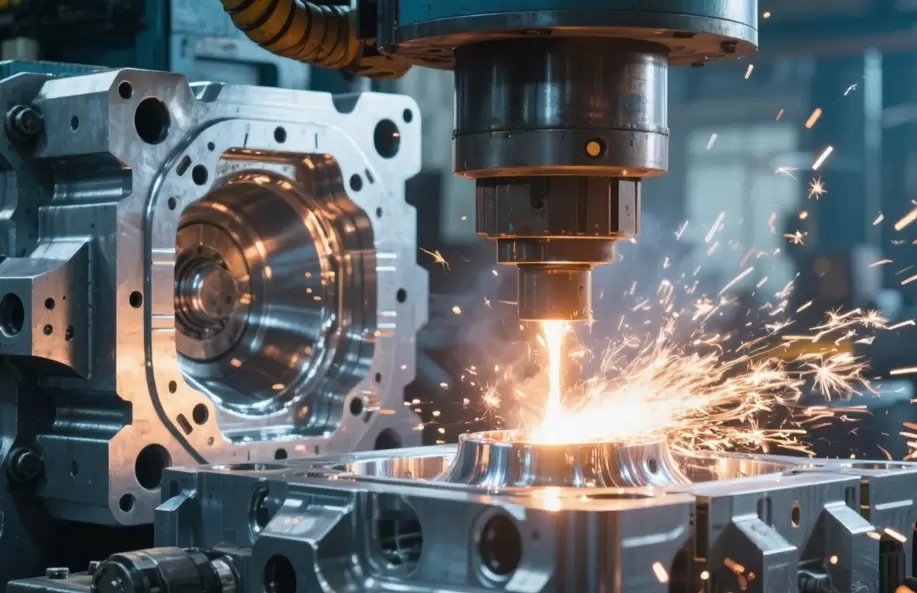
High-speed machining and metal forming generate significant heat. Without proper cooling, equipment wear increases and product quality declines.
An advanced industrial process cooling system addresses these challenges by:
· Maintaining consistent coolant temperature
· Preventing thermal deformation of tools
· Extending equipment lifespan
AODE’s integrated cooling solutions are designed for large flow rates and stable output, making them suitable for demanding industrial applications.
One of the most significant shifts in 2026 is the transition from standalone temperature control units to system-level solutions.
Traditional setups often involve separate chillers, heaters, and control modules, leading to:
· Inefficient energy use
· Limited coordination between processes
· Increased maintenance complexity
In contrast, modern systems—such as those developed by AODE—offer:
· Centralized control platforms
· Modular design for scalability
· Seamless integration with smart manufacturing systems
This evolution reflects a broader industry trend toward digitalization and intelligent manufacturing.
AODE has moved beyond single-product manufacturing to deliver complete temperature control systems. This includes:
· Centralized water temperature control units
· Multi-channel distribution systems
· Intelligent monitoring and diagnostics
By integrating multiple functions into one system, AODE helps manufacturers simplify operations while improving performance.
With increasing demand for tighter tolerances, AODE has focused on developing high-end equipment capable of:
· ±0.1°C temperature control accuracy
· Rapid response to load changes
· Stable operation in harsh industrial environments
Such precision is essential for industries like aerospace, automotive, and high-end electronics, where even small deviations can have significant consequences.
No two metal production lines are exactly the same. AODE’s engineering approach emphasizes customization based on:
· Process requirements
· Material characteristics
· Environmental conditions
This ensures that each solution delivers optimal performance in its specific application.
Energy consumption is a major concern in metal manufacturing. Advanced metal production thermal management systems contribute to sustainability by:
· Reducing heat loss
· Optimizing energy usage
· Enabling heat recovery
AODE incorporates these principles into its designs, helping clients lower operational costs while meeting environmental goals.
In 2026, digital technologies are transforming how temperature control systems operate. Key developments include:
· IoT-enabled sensors for real-time data collection
· AI-driven predictive maintenance
· Cloud-based monitoring and analytics
These innovations allow manufacturers to move from reactive to proactive management, reducing downtime and improving overall efficiency.
AODE’s systems are designed to be compatible with smart factory frameworks, enabling seamless integration into Industry 4.0 environments.
Despite significant advancements, the metal industry continues to face challenges such as:
· Increasing complexity of materials
· Higher precision requirements
· Pressure to reduce energy consumption
Future developments in industrial temperature control for metal industry will likely focus on:
· Ultra-high precision control systems
· Greater automation and autonomy
· Enhanced data analytics capabilities
Companies that invest in advanced temperature control technologies will be better positioned to meet these demands.
As precision manufacturing continues to evolve, temperature control has become a central factor in achieving consistent quality and operational efficiency. From casting and extrusion to heat treatment and machining, every stage of metal production depends on stable and accurate thermal management.
With its long-standing expertise and commitment to innovation, AODE (SUZHOU AODE PRECISE EQUIPMENT Co., LTD.) is at the forefront of this transformation. By delivering integrated, high-performance solutions, the company is helping manufacturers navigate the complexities of modern production and achieve new levels of precision.
In 2026 and beyond, the role of industrial temperature control for metal industry will only continue to grow, shaping the future of manufacturing in profound ways.